Goldmeadow
Contents
Overview
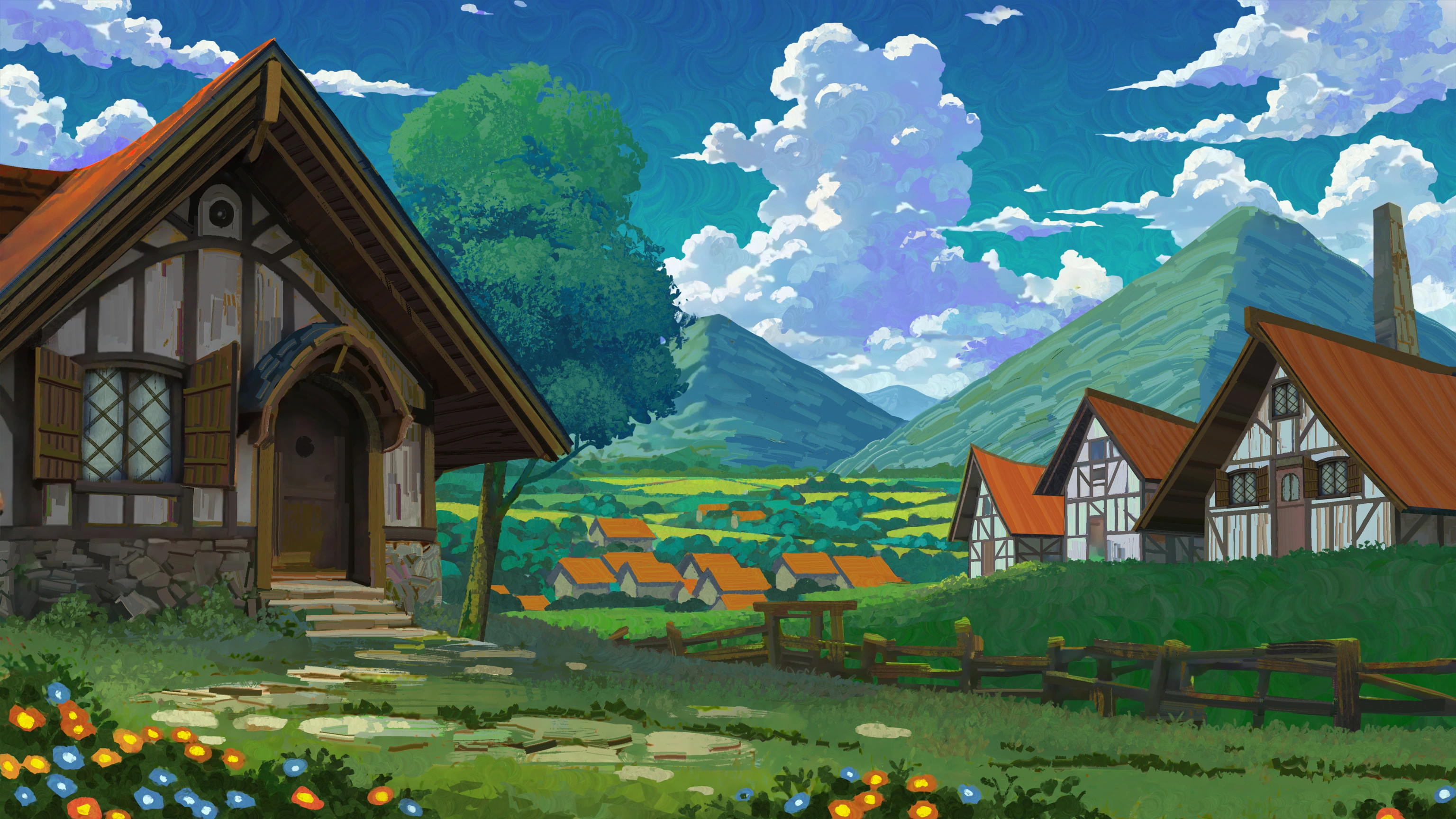
Goldmeadow is a prosperous agricultural town situated at the eastern foothills of the Central Spine, where the Great Pass descends into the fertile lowlands of the Crownlands. Home to approximately 16,000 people, it is the largest settlement in the Duchy of Highcourt outside the capital and serves as the duchy’s principal centre of agricultural production and food distribution.
Surrounded by extensive farmland, orchards, pastures and smaller farming villages, Goldmeadow supplies much of the grain, produce and livestock required to sustain Highcourt and its military garrisons. Its extensive granaries and carefully managed food reserves are considered essential to the duchy’s security, particularly during the harsh winters that can isolate settlements further into the mountains.
Unlike the austere fortifications of Highcourt and Greywatch, Goldmeadow is known for its comfortable homes, well-maintained streets, lively markets and picturesque countryside. Its inhabitants take considerable pride in their agricultural heritage, regarding the provision of food and supplies as an important contribution to the defence and prosperity of the duchy.
Goldmeadow is governed by Lady Rosamund Valehart, its hereditary ruler, alongside Magistrate Perrin Wycliffe, who oversees the town’s civic administration.Goldmeadow is a prosperous agricultural town situated at the eastern foothills of the Central Spine, where the Great Pass descends into the fertile lowlands of the Crownlands. Home to approximately 16,000 people, it is the largest settlement in the Duchy of Highcourt outside the capital and serves as the duchy’s principal centre of agricultural production and food distribution.
Surrounded by extensive farmland, orchards, pastures and smaller farming villages, Goldmeadow supplies much of the grain, produce and livestock required to sustain Highcourt and its military garrisons. Its extensive granaries and carefully managed food reserves are considered essential to the duchy’s security, particularly during the harsh winters that can isolate settlements further into the mountains.
Unlike the austere fortifications of Highcourt and Greywatch, Goldmeadow is known for its comfortable homes, well-maintained streets, lively markets and picturesque countryside. Its inhabitants take considerable pride in their agricultural heritage, regarding the provision of food and supplies as an important contribution to the defence and prosperity of the duchy.
Goldmeadow is governed by Lady Rosamund Valehart, its hereditary ruler, alongside Magistrate Perrin Wycliffe, who oversees the town’s civic administration.
Geography
Goldmeadow occupies a broad, fertile valley at the eastern end of the Great Pass, where the steep slopes of the Central Spine gradually give way to rolling hills, open meadows and extensive agricultural land. The surrounding countryside is particularly well suited to grain cultivation, orchards and livestock grazing, with streams descending from the mountains providing a dependable supply of fresh water.
A modest river flows through the outskirts of the town, powering several watermills before continuing eastwards into the Crownlands. Smaller irrigation channels and drainage works support the surrounding farmland, while a network of well-maintained roads connects Goldmeadow with its dependent villages and estates.
The town itself is built primarily from pale local stone and timber, with tiled roofs, spacious courtyards and attractive public gardens. Its streets are generally wider and more open than those of Highcourt, and many houses incorporate small gardens or productive plots of land.
Goldmeadow is protected by a modest defensive wall and several gatehouses, although its fortifications are considerably less imposing than those of the settlements further into the Great Pass. Beyond the town, the countryside is dotted with farmsteads, windmills, barns and small villages, many of which have supplied Goldmeadow’s markets for generations.
Government
Goldmeadow is governed by a hereditary Lord or Lady of Goldmeadow, who holds authority over the town and its surrounding estates under the sovereignty of the Duke or Duchess of Highcourt. The current ruler, Lady Rosamund Valehart, is a human woman in her early fifties and a respected member of the duchy’s landed nobility.
Rosamund is a capable administrator and experienced landowner who takes a personal interest in the welfare of the farming communities under her authority. Personable, pragmatic and occasionally stubborn, she is particularly concerned with maintaining the long-term productivity of Goldmeadow’s agricultural estates. Although she maintains a cordial relationship with Duchess Isolde Kestrel, Rosamund is willing to challenge requests for excessive grain levies or agricultural requisitions when she believes they threaten the welfare of her people.
The town’s day-to-day administration is overseen by Magistrate Perrin Wycliffe, an elderly halfling who has served Goldmeadow for several decades. Perrin is responsible for civic records, taxation, legal disputes, public expenditure and the administration of the town’s municipal services. Known for his remarkable memory, patient manner and exceptionally dry sense of humour, he is widely respected by Goldmeadow’s inhabitants.
The Lady and Magistrate maintain a productive working relationship, although disagreements occasionally arise over the allocation of public funds, agricultural regulations and the competing demands of the town and its surrounding estates. Both ultimately answer to Duchess Isolde Kestrel, whose authority extends throughout the duchy.
Culture and Religion
Goldmeadow’s inhabitants are known for their hospitality, industriousness and strong attachment to the land. Agriculture shapes much of the town’s social and cultural life, with seasonal planting, harvesting and livestock fairs providing important occasions for communal gatherings.
Unlike the military settlements further into the Central Spine, Goldmeadow maintains a comparatively relaxed atmosphere. Its markets are lively, its inns well frequented and its public celebrations often accompanied by music, dancing and generous quantities of food and drink. Nevertheless, the town shares Highcourt’s emphasis on preparedness and collective responsibility. Agricultural production is regarded not merely as a source of prosperity, but as an essential contribution to the security of the duchy.
The Harvest Reckoning
Goldmeadow’s most important annual celebration is the Harvest Reckoning, held following the completion of the principal autumn harvest. During the Reckoning, agricultural officials, estate representatives and the Magistrate’s clerks assess the year’s yields, inspect the town’s emergency grain reserves and determine how much produce may safely be exported or distributed elsewhere in the duchy.
The formal proceedings are followed by a major market fair, communal feasting, music, dancing and competitions amongst the surrounding farming communities. Although the Reckoning serves an important administrative purpose, it is also a celebration of the year’s labour and the prosperity it has brought.
Trade and Economy
Goldmeadow is the agricultural heartland of the Duchy of Highcourt, producing substantial quantities of grain, vegetables, fruit, livestock and other essential goods. Its surrounding estates cultivate wheat, barley and other cereals, alongside root vegetables and orchard fruits. Cattle, sheep and poultry are raised throughout the surrounding countryside, supporting the production of meat, dairy products, wool and leather. The town also supports numerous mills, bakeries, breweries, dairies and food-preservation workshops, which process agricultural produce for local consumption and export.
Much of Goldmeadow’s trade is directed towards Highcourt, Greywatch and the duchy’s more remote military installations. Grain, preserved foods and other supplies are transported along the Great Pass in organised wagon trains, often accompanied by Marchwarden escorts during periods of heightened danger. The town’s position at the eastern entrance to the Pass also makes it an important commercial stopping point for merchants travelling between the Crownlands and the mountain settlements.
The Ducal Reserves
Goldmeadow maintains extensive emergency food reserves on behalf of the Duchy of Highcourt. These stores are carefully monitored by the Magistrate’s administration and inspected regularly to ensure that sufficient provisions remain available in the event of severe winters, disrupted trade routes or military emergencies.
The reserves are replenished following each harvest, with older supplies rotated into ordinary distribution to prevent spoilage. The system is considered one of Goldmeadow’s most important responsibilities, and its effective management has earned the town considerable respect throughout the duchy.
History
Early Settlement
The fertile valleys surrounding Goldmeadow supported farming communities long before the establishment of the Lesterian Empire. Early inhabitants cultivated the land, raised livestock and established small settlements along the streams descending from the Central Spine. The area’s position near the eastern entrance to the Great Pass made it a natural stopping point for travellers moving between the mountains and the wider Crownlands.
The Lesterian Empire
Following the Grand Unification Crusade, the lands surrounding Goldmeadow were incorporated into the Lesterian Empire. The imperial administration recognised the agricultural potential of the valley and encouraged the expansion of farming estates, roads and storage facilities to support the garrisons stationed throughout the Great Pass. As Highcourt developed into a major frontier fortress, Goldmeadow became an increasingly important source of food and supplies.
During this period, the settlement expanded into a substantial market town, with mills, granaries and merchants’ premises developing around its principal roads.
The Long Dissolution
As imperial authority weakened during the Long Dissolution, Goldmeadow’s landed families and civic officials increasingly relied upon Highcourt for protection and political stability. House Valehart emerged as one of the region’s most influential landholding families and ultimately secured hereditary authority over Goldmeadow under the newly independent Duchy of Highcourt.
The settlement retained its agricultural importance, supplying the capital and its garrisons while continuing to develop its own civic institutions and commercial networks.
The Long Winter
During the severe winters and monstrous incursions remembered as the Long Winter, Goldmeadow played a vital role in sustaining Highcourt’s defenders and civilian population. The disruption of mountain roads and destruction of outlying settlements placed enormous pressure upon the duchy’s food supplies.
Although Goldmeadow itself was spared the worst of the fighting, its inhabitants organised the collection, preservation and transport of provisions to support the isolated mountain communities. The experience led to the expansion of the town’s emergency storage facilities and the development of increasingly rigorous systems for maintaining the ducal food reserves. These arrangements eventually evolved into the modern administration of the Great Granary and the annual Harvest Reckoning.
The Modern Town
Today, Goldmeadow remains one of the most prosperous settlements in the Duchy of Highcourt. Its fertile estates, extensive agricultural industries and well-maintained transport routes continue to supply the capital and the military settlements of the Great Pass. Under the leadership of Lady Rosamund Valehart and Magistrate Perrin Wycliffe, the town has maintained its reputation for sound administration, agricultural prosperity and strong civic traditions.
Although far removed from the imposing walls and military discipline of Highcourt, Goldmeadow remains indispensable to the duchy’s security, embodying the belief that preparedness begins as much in the fields and granaries as upon the battlements.
Districts
Harvest Square
Harvest Square forms the commercial and civic heart of Goldmeadow. Centred upon a spacious public marketplace, the district contains merchants’ premises, inns, administrative buildings and numerous shops selling agricultural goods and locally manufactured products.
The square hosts regular markets and seasonal fairs, attracting farmers, traders and visitors from throughout the surrounding countryside. During the Harvest Reckoning, it becomes the principal venue for the town’s celebrations.
Millward
Situated along the river flowing through Goldmeadow’s outskirts, Millward is the town’s principal industrial and food-processing district. Watermills, granaries, bakeries, breweries and workshops line the riverbanks, supported by warehouses and yards used for storing and transporting agricultural produce. Although busier and more utilitarian than the town’s central streets, Millward is an important source of employment and economic activity.
Valehart Green
Valehart Green is a prosperous residential district surrounding the ancestral estate of House Valehart. Its broad streets, well-maintained gardens and substantial stone houses are home to many of the town’s wealthier merchants, landowners and civic officials. Despite its association with the local nobility, the district includes several public gardens and open spaces enjoyed by the wider population.
Points of Interest
The Great Granary
An extensive complex of fortified grain stores, warehouses and preservation facilities situated near Millward. The Great Granary houses a substantial portion of the duchy’s emergency food reserves and is maintained under the supervision of the Magistrate’s administration.
Its stores are carefully inventoried, inspected and replenished throughout the year, with particular attention paid to the condition of grain and other provisions intended for long-term storage. Although its architecture is largely functional, the Great Granary is regarded with considerable civic pride and is amongst Goldmeadow’s most important public institutions.
Harvest Square
The principal marketplace and gathering place of Goldmeadow. Surrounded by merchants’ premises, inns and civic buildings, Harvest Square hosts regular agricultural markets, livestock auctions and seasonal celebrations. It is particularly renowned for the Harvest Reckoning, when the square fills with traders, musicians, entertainers and visitors from the surrounding countryside.
Valehart Hall
The ancestral residence of House Valehart and the administrative seat of Goldmeadow’s hereditary rulers. Valehart Hall is an elegant but comparatively modest manor complex, surrounded by landscaped gardens, orchards and productive estate lands. The hall contains the private residence of Lady Rosamund Valehart, chambers for visiting dignitaries and offices concerned with the management of the family’s estates. Unlike the imposing military residences of Highcourt, Valehart Hall is designed primarily for comfort, hospitality and the administration of agricultural lands.
The Millward Mills
A collection of substantial watermills situated along the river in Millward. The mills process grain harvested throughout Goldmeadow’s surrounding estates, supplying flour and other products to the town, the capital and the duchy’s military garrisons. Several have operated for centuries, undergoing repeated repairs and improvements as agricultural production has increased.